

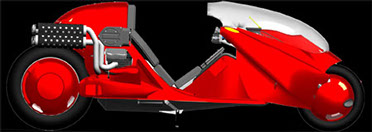
Welcome to Matus1976's Akira Bike Project - Building a fully functional high performance recumbent motorcycle inspired by Kaneda's ride in "Akira"

The Akira Bike (Kaneda's bike from the film) will be the inspiration for the form of this motorcycle. It will first and foremost however be a functional vehicle, the similiaraties to the vehicle from the movie will come secondarily to a safe, reliable, functional well performing vehicle.
There are obvious aspects from the design of the bike in the film that are severe shortcomings when faithfully translated to a functional vehicle. One is the size of the vehicle, another is the lean angle, while others are the drive system and engine placement. Most are somewhat superficial and easy to design around, others are fundamentally different because we do not have the advanced technology depicted in the film, and a few are just plain bad ideas when applied to motorcycles. For the most part though, the design in the film was prescient and a decent implementation of a recumbent motorcycle.
Developmental Prototype
Final Version



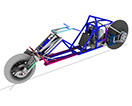
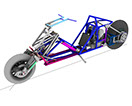
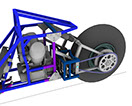
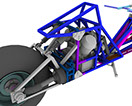
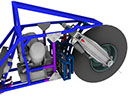
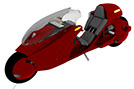
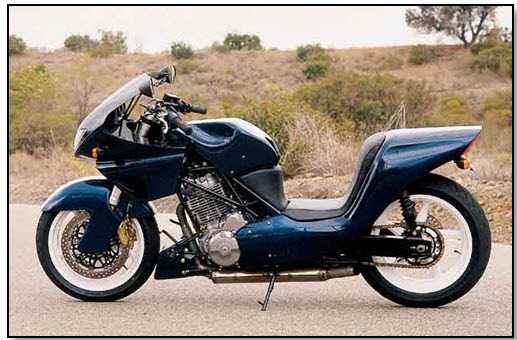
The first major step of the developmental prototype, the powered hard tail rolling chassis. With no suspension in the rear and a chain drive, this tests the basic geometry and functionality. The build is all ready close to this point.
The next major stage will be the adidtion of the powered egress system, which raises and lowers to allow easy entry / exit from the vehicle as well as the low speed balancing system, which deploys when the vehicle slows to a stop to prevent it from tipping over.
The next phase will add suspension to the rear.
Once the dynamics of suspension have been tested and refined, my patent pending drive system will be installed.
Once the drive system has been demonstrated, a longer version will be added along with a single sided rear swingarm. This will complete the functionality which will be included in the final version of the bike.
Once the developmental prototype has gone through its paces, refinement, and testing, and entirely new bike will be built from the ground up, representing the final version of my Akira Bike Project.
The last stage will involve enveloping the final version of the bike in appropriate paneling, lights, and fairings.
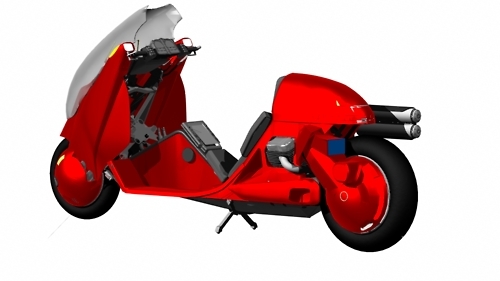
My Akira Bike project is a motorcycle unlike any other motorcycle. It is a recumbent, rear engine, two wheel steering vehicle with a powered egress system, dynamic stabilizer, and a powerful high torque flexible drive shaft that I invented for this project.
Background
First, a little background. Motorcycles have changed little in a fundamental sense, while chassis engineering, engine technology, tires and braking components, etc, have evolved significantly, the overall design of the motorcycle hasn’t changed much, and though conventional upright bikes have significant advantages in off-road riding, they have some disadvantages on road.
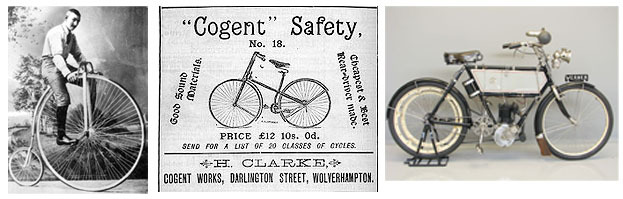
Let's consider for a moment the history of the motorcycle. In the late 19th century people rode around on the first bicycles, the 'high wheel bikes' you know, the ones with giant front wheels that look comical by today’s standards and were nearly impossible to ride. Then someone figured that moving the riders feet away from the center of the wheel by using a leather belt to turn the wheel would be good, as the front wheel could be shrunk and the rider sit at waist height, thus the modern ‘safety bicycle’ was born. The safety bicycle is noteworthy for changing the perception of bicycles from dangerous toys ridden by adventurous young men to a practical tool for transportation that both men and women could use. One day, someone bolted an engine to the ‘safety bicycle’ ... and the modern motorcycle was born. Few stopped to ask if this was the best way to make a powered two wheel vehicle, and little incentive has since existed to change it, with motorcycle racing rules explicitly forbidding anything even remotely like a recumbent vehicle, and motorcycle sales heavily influenced by which bikes win the races, and conventional designs 'good enough'
Recumbent Motorcycles
With that in mind, let me tell you about my motorcycle, and what makes it a unique vehicle, and why it could do for motorcycles what the safety bicycle did for bicycles.
As a recumbent, It is a very long and low vehicle, almost ten feet long and barely four feet high, for this prototype. This unique geometry, known as ‘feet forward’ by enthusiasts, offers tremendous practical advantages. A long vehicle with a low center of gravity can accelerate faster and stop faster than conventional motorcycles, and such a vehicle also has a higher top speed potential as well as significantly better fuel efficiency.
It can accelerate faster because more power can be put to the rear wheel without raising the front off the ground, and thus wasting power and increasing the aerodynamic profile of the bike, like a sail raising in the wind. Professional drag racers hover their front wheel just fractions of an inch off the ground. The resistance for a body like a motorcycle to rotate, as in popping a wheely, is known in physics as the polar moment of inertia. This polar moment of inertia actually increases with the square of the distance, so a vehicle that is twice as long requires four times as much power to rotate. So a long low vehicle can put much more power to the wheel and use it for acceleration than a short tall one can.
In fact, Dan Gurney's "Alligator" an underpowered low center of gravity bike with a single cylinder 650cc engine had the fastest 0-30 time Cycle World had ever tested in a non drag bike. Though Gurney's bike is lite and small and you lean forward instead of backwards, my Production Prototype will have an engine with twice the power and should have similarly scaled performance characteristics.
And for similar reasons, a motorcycle like this can also stop much quicker with less weight getting transferred off the rear wheel and the braking can be more evenly distributed among the two wheels. This also means the rider can interact with the braking system in a much simpler fixed ratio, more like a car than conventional upright bikes where as weight is transferred to the front wheel braking pressure has to be reduced on the rear and increased on the front. During an emergency situation this is obviously something difficult and dangerous to attend to skillfully.
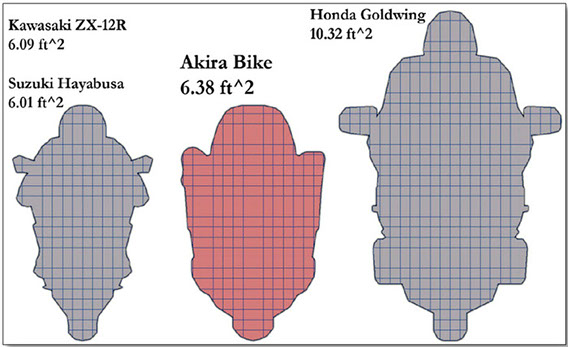
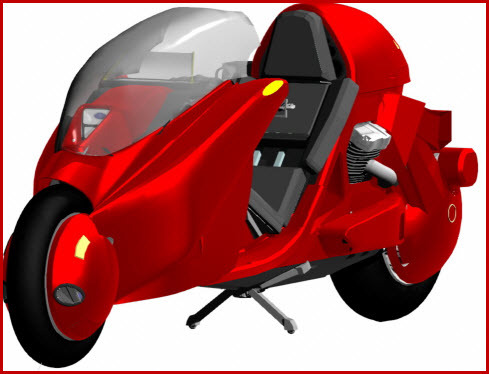
A bike like this has a higher top speed and greater fuel efficiency because it has less drag. Drag is influenced by two things, the frontal cross sectional area of the bike and the coefficient of drag. If you look at a bike from the front you get it's cross sectional area, this is representative of how much air must be moved out of the way. The Akira Bike Project's Production Prototype is only slightly higher than a fully prone rider on a Hayabusa.
The Coeffecient of Drag comes from the difference in frontal air pressure compared to the air pressure in the rear of the vehicle. A common misconception in aerodynamic design is that the front is what is important, at highway speeds, the rear of the vehicle is far more important. The reason for this is that air has little difficulty getting out of it's own way as it is pushed aside by a vehicle moving through it, but it has great difficulty filling back in the void left over. The rear of a vehicle should taper smoothly to a closed body, it can not taper faster than the air can fill itself back in. At highway speeds, a conventional motorcycle is much too short to provide a gentle taper allowing air to fill back in the low pressure void left behind a vehicle. A long low recumbent bike has the necessary length. http://craigvetter.com/pages/470MPG/TTXGP%20Fairing.html
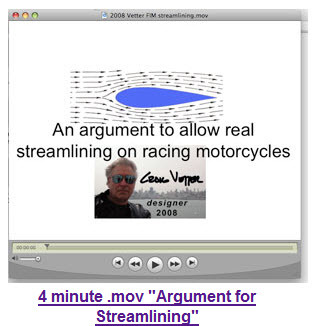
Check out Motorcycle Fairing Designer Craig Vetter's appeal to FIM (motorcycle racing regulation body) on changing their rules to allow streamlining. It is a good primer on aerodynamic streamlining for motorcycles and how racing rules have hindered it.
http://craigvetter.com/Movies/2008-Vetter-FIM.mov
This all means that it takes less energy to push a vehicle through the air, which translates directly to fuel efficiency. Many motorcycles all ready get 40 – 50 miles per gallon, a long low recumbent will significantly increase that, reaching from 75 – 100 miles per gallon.
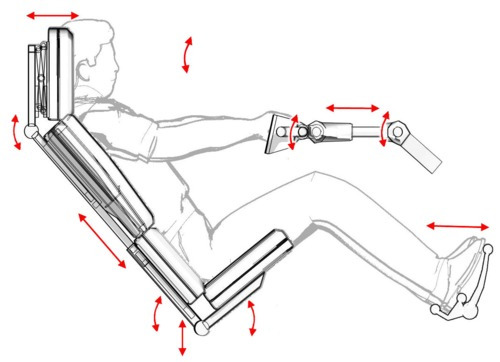
The reclined seating position is also highly adjustable and extremely comfortable for extended periods, seriously reducing driver fatigue, and it is also conducive to being harnessed with a seat belt like restraint system. Since the overwhelming majority of motorcycle accidents are front end collisions, then in the overwhelming majority of motorcycle accidents a recumbent motorcycle can offer similar protection that a small car can. Having personally suffered a painful front end collision, this advantage is of great interest to me.
Rear Engined
Unlike almost every other motorcycle ever made, the rider in this vehicle sits in front of the engine instead of straddling above it. Sitting up above an engine drastically increases the aerodynamic profile of the vehicle and raises the center of gravity, both detrimental effects. Putting the engine in front of the rider elongates the front and still causes the rider to straddle them, and also creates the need for a complex drive system to route the power of the engine under the rider and back up to the rear wheel.
In my bike, a nice V Twin engine is mounted transversely (side to side) which makes it take up significantly less space from the front to the back of the vehicle, while keeping the center of gravity (combined with the riders center) extremely low to the ground, and combined with the weight of the rider and the powered lifting front end, a nice even weight distribution among the whole length of the bike.
Powered Egress
Ok, so one notable disadvantage of a long low vehicle is egress… it’s like getting up out of a reclined beach chair – better if someone is standing next to you to help you up. In lieu of that, and realizing the advantage of getting some help up out of such a low seat, the truly inspired nature of the Anime Akira Bike shines through. In my build, just as the bike in the film does, and unlike any replica built yet, the entire front end, with the touch of a button, raises up. And once raised, locks in the raised position, allowing the rider to quickly and elegantly pull themselves up by the handlebars they are all ready holding. Another press off the button once seated, and you pull the handlebars down and they lock into the bike.
Dynamic Stabilization
You might be wondering, when you come to a stop on this vehicle, like any other motorcycle, won’t it just fall over? And sitting like that, so low and leaning back, won’t it be hard to hold the bike up? And of course you’d be right. On a conventional bike, holding the legs out and straight is sufficient for the smallest of adults to hold up even very heavy bikes, and it uses the strongest muscles of the leg to do so. In contrast, in my bike, if you were to put your legs out to hold it up, you would mostly be using your much weaker outer leg muscles. And even though the very low center of gravity makes that much easier, It would be still be preferable to use those strong quads to hold the bike up, if only I convert that same motion into one that holds a bike up…
Conventional motorcycle designs put the front brake on the right hand, and the rear brake at your right foot. Two different brakes are needed because of that complex braking control required to compensate for the shifting weight of the vehicle mentioned earlier. But a long low vehicle, like a car, doesn’t require those shifting ratios and can get equal performance with fixed ratios. A car typically would see it’s front wheels do 60% of the braking and the rear wheels handle 40%. This bike can get away with similar ratios, this means that your right hand can handle all the braking input, freeing up your right foot. Motorcyclists are all ready used to using the right foot during braking, but instead of creating a braking force, on my bike, your right foot will lower two stabilizers with casters, like a center stand with wheels, that will hold the bike up when you come to a stop. This is done by pushing your foot forward, using the same strong muscles a motorcyclist uses in an upright conventional bike.
In the future I would like to experiment with stabilization gyros. But a major advantage that comes from this is that these stabilizers can be lowered any time. If you are afraid of icy conditions, push the right foot forward to keep you upright. Hitting a patch of oil or sand? Push that right foot forward.
Even though only one leg is being used, it is plenty strong enough, since that rotating moment of inertia increases with the square of the distance and this bikes center of gravity is half the height of a conventional bike, which means it needs only 1/4 as much force to keep from falling over.
When not in use, this stabilizer folds neatly up under the body of the bike, and being spring loaded with an off center of rotation, won’t get stuck in the down position and will give if it’s down and you hit a large obstacle.
Two Wheel Steering
One of the biggest innovations being implemented in this bike project is two wheel steering. Yes you read that right, both the front wheel AND rear wheel of this vehicle will turn when you turn the handle bars. This helps compensate for the larger turning radius a long bike creates, but it also has many other advantages, which, unfortunately I can not discuss in detail until my patent protection is secured.
High Torque Flexible Drive
A major difficult that arises from a two wheel steering vehicle however is how to power that steered rear wheel. Most motorcycles are powered by either chains or solid drive shafts, with a handful powered by composite belts. All of these have unique advantages and disadvantages, chains are lightweight and can handle high loads, but require periodic maintenance and can catastrophically fail, while drive shafts are maintenance free and reliable, but heavy and require high tolerance, expense bevel gears.
Neither of these are practical for powering a steered rear wheel. Any chain would need to be flexible from side to side, to compensate for the wheel as it moved, or multiple sets of chains would be needed. Drive shafts and bevel gears could work, however a few pairs would be needed with each weighing a few pounds and being costly.
A few reasonable solutions exist, but none I found satisfactory, so I set out to make my own solution. Having studied physics and engineering and material properties for some time a solution came to me. The result is a flexible drive shaft that can handle the high torque of a high performance motorcycle and bend around multiple corners with minimal losses. A local university accepted this idea into their Intellectual property law clinic and sponsored all the intellectual property work drafting a patent required.
I have only been able to build a smaller prototype version of this drive shaft and need to build some stress testing equipment as well as build the machine required to build this high torque drive shaft, which will ultimately offer a viable new power delivery system to all vehicles. The first large scale prototype will be tested in this functional build.
Functional Prototype Current Progress
The current progress of this build is my Functional Prototype. Most complex builds go through multiple generations, the Functional Prototype is not optimized for speed or performance or for weight reduction and is just to test and refine the basic geometry and unique innovations of my build. I am about 80% complete with the functional prototype, and testing will progress through phases starting with refining the front end steering with a hard tail chain driven rear and progressing through adding and testing each unique innovation one by one until every aspect is tested.
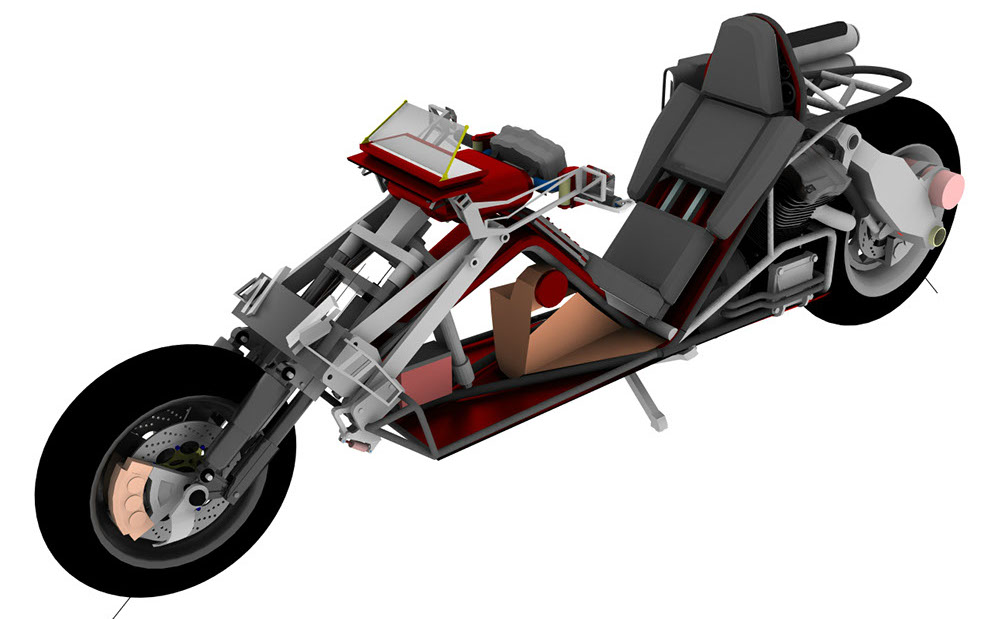
The Production Prototype represents what a production model of this vehicle will look like. Every detail of this design is worked out down to individual bolts, it will be refined based on results of the testing of the Functional Prototype, and then will be built of all new high performance high quality components. Kickstarter funding will fund the completion and testing of the Functional Prototype, the successful demonstration of that will make raising money to build the Production Prototype a million times easier.
Akira Inspired
This bike project was born out of my lifelong passion for engineering design, construction, and invention. For years before this I had been working on a design for a futuristic aerodynamic motorcycle like vehicle, along with hundreds of other inventions. Finally one day I decided I must pick one and focus on it, and this was my choice. Around that time anniversary edition of Akira came out, and I realized how similar that design was to my own, and how remembered cool that bike was. So I decided to style my bike project with the futuristic organo metallic look depicted in the film, popularized by the movies creator Katsuhiro Otomo and another favorite artist of mine Syd Mead.
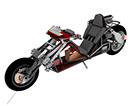
The current design of the Production Prototype
While other people have built Akira inspired bikes, I am quick to point out none are fully functional. Many have fake plastic ‘wheels’ covering their tiny scooter wheels. Others replicate the every scratch and sticker in the film, but are made of wood and don’t even have an engine. Most are simply too small, can not lean over at all, or woefully underpowered as Bikes over 400cc are very rare in Japan.
About Me
So who am I, I am an avid motorcyclist and "Do It Yourselfer" and passionate student of physics, science, philosophy, politics and history. But my deepest passion is inventing, with a particular focus on transportation related technologies.

Help bring the fully functional high performance production Akira inspired motorcycle into existence...


Contribute through Amazon affilicate purchases
Donate directly
go to crowdfund for more options


send donations to


